What Are Meal Toppers for Homemade Dog Meals?
A bowl of plain kibble can feel repetitive. A home-cooked meal can feel more personal, but it also raises a fair question: does it contain everything your dog needs? So, what are meal toppers? They are additions you put over or mix into a dog’s usual food to add flavor, variety, nutrients, or structure to the meal.
The word “topper” covers a lot. Some toppers are simply tasty extras, while others are designed to help make a simple home-cooked meal nutritionally complete. Knowing the difference matters, especially when you cook for your dog regularly.
What are meal toppers for dogs?
A meal topper is anything intended to be added to a dog’s regular meal. It may come as a powder, sauce, flakes, or a ready-made mixture. Depending on the product, it can make a meal more appealing, add specific nutrients, or complement the ingredients already in the bowl.
A topper is not automatically a complete food. A little cooked vegetable, a spoonful of leftover rice, or a meaty garnish may change the taste and texture of dinner, but it does not necessarily provide the vitamins and minerals that a dog needs over time. That distinction is particularly useful for people who like cooking with vegetables, legumes, grains, and suitable leftovers.
As a veterinary nutritionist, I often see that the best feeding routine is not the most complicated one. It is the one that fits real life and is put together thoughtfully. A meal topper can help make that possible, but only when you understand its purpose.
Why add a meal topper to a dog’s bowl?
For some dogs, a topper brings welcome variety to a familiar meal. This can be useful when a dog loses interest in the same flavor day after day, although sudden fussiness can also have other causes worth discussing with your own veterinarian if it persists.
For home cooking, the role can be bigger. Basic ingredients such as lentils, rice, oats, vegetables, and a modest amount of meat can form a practical meal base. Dogs can use both animal and plant ingredients, but a homemade bowl still needs to be balanced with care. Protein is only one piece of the picture. Vitamins, minerals, fatty acids, and the right overall proportions matter too.
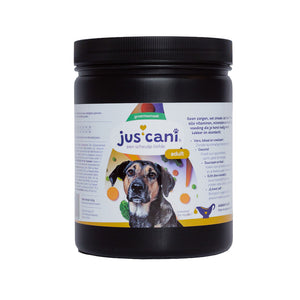
That is where a nutritional topper differs from a casual garnish. Jus’Cani is a vegetarian gravy powder that is mixed with one part powder and two parts lukewarm water, then poured over the meal. It provides vitamins, minerals, prebiotics, and omega 3, so simple meals can be completed according to the product directions. It can also be used over kibble when you want to add variety without changing the entire routine.
A topper is not the same as a supplement
The terms are often used interchangeably, but they describe different jobs. A supplement generally focuses on one or a few nutrients. A meal topper is added directly to the bowl and may be used for taste, texture, nutritional completion, or a combination of these.
Neither category is automatically better. It depends on what is already in the bowl. If your dog eats a complete commercial food, adding several nutrient-rich extras without a reason can make the overall diet less balanced. If you cook most meals yourself, a topper formulated for that purpose may be more practical than trying to combine separate powders and oils.
The label tells you a great deal. Look for clear feeding directions, a full ingredient list, and an explanation of whether the product is meant as a complementary addition or part of a complete homemade feeding plan. Be wary of vague promises. Food should be honest about what it is designed to do.
When does a meal topper make sense?
A topper can be a sensible choice when you want to make kibble more varied, use a simple cooked meal as part of the week, or reduce waste by incorporating dog-appropriate leftovers. It can also help people who want to cook mostly plant-based meals while still paying close attention to nutritional balance.
There are trade-offs. A topper adds another step and another cost to the feeding routine. It also does not make every leftover suitable for dogs, and it cannot compensate for unsafe ingredients or an unbalanced recipe used in the wrong proportions. Keep meals simple, repeatable, and appropriate for your individual dog.
If your dog has ongoing digestive upset, persistent skin concerns, unexplained weight change, or a major change in appetite, do not try to solve it by rotating toppers. Speak with your own veterinarian or Ask the Vet for individual guidance.
How to choose a meal topper with care
Start with your feeding goal. Are you looking for a little more interest at mealtime, or do you need support to prepare homemade meals responsibly? Those are different needs and deserve different products.
Then consider your dog’s usual food. A topper for homemade cooking should have clear instructions for combining it with a meal base. A topper for kibble should fit the rest of the diet rather than becoming a large, unmeasured extra. Small additions can add up quickly.
Finally, keep your dog’s preferences in mind. Some dogs enjoy a pourable gravy, while others prefer their food dry. Introduce any new addition gradually so you can observe how your dog responds to the change in routine. Consistency makes it much easier to tell what is working.
A simple 400-gram homemade meal idea
This is a practical meal base for a day when you want to cook simply. It is not a universal feeding amount. The right daily portion depends on your dog’s size, activity level, age, and the rest of the day’s food.
Cook 160 grams of rice, 140 grams of lentils, and 100 grams of finely chopped dog-appropriate vegetables such as carrot and zucchini. Mix while warm, then prepare your nutritional gravy topper exactly as directed on its packaging. Add a splash over the 400-gram meal base and stir well.
The meal can be cooked in batches and frozen in portions. That is often the part that makes home cooking realistic: one calm cooking moment, several easy meals afterward. For a personalized starting point, use a menu calculator or recipes tailored to your dog rather than copying another dog’s portion.
How to introduce a topper
Change does not need to be dramatic. Begin with a small amount mixed into your dog’s familiar food, then build up gradually according to the product directions. This gives your dog time to adjust and helps you keep the bowl familiar.
Avoid changing several things at once. If you switch kibble, start cooking, and add a new topper in the same week, it becomes hard to know which change your dog likes or tolerates best. One thoughtful adjustment is usually enough.
Can meal toppers replace dog food?
Usually, no. Many toppers are complementary additions rather than complete meals. A topper can be part of a balanced home-cooked plan when it is specifically designed and used for that purpose, but it should never be assumed from the word “topper” alone.
Can I use a meal topper on kibble?
Yes, many toppers are made to be poured over or mixed into kibble. Follow the label directions and remember that additions contribute to the total amount your dog eats.
Are homemade meals with a topper easier than cooking everything from scratch?
They can be. A well-designed topper can reduce the need to measure many separate nutrients. You still need a suitable recipe, sensible portions, and consistency, but the daily process can stay pleasantly simple.
My tip: do not aim for a perfect-looking bowl. Aim for a feeding routine you can maintain with love, care, and clear information. That is where good nutrition starts.