Dog Topper Versus Gravy: What’s the Difference?
Dog topper versus gravy is not always a clear-cut choice. The words are often used interchangeably, but they can describe very different additions to a dog’s meal: one may be a substantial food component, while the other is mainly a flavorful sauce. What matters most is not the name on the front of the package, but what is actually in it and what role it plays in the bowl.
For people who cook for their dogs, use leftovers thoughtfully, or want to make kibble more appealing without making feeding complicated, that distinction is useful. A topper or gravy can bring variety and enjoyment to a familiar meal. It should also fit the rest of the diet rather than quietly replacing the nutrition your dog needs.
What is a dog food topper?
A topper is a broad term for something added on top of a dog’s usual food. It can be moist food, cooked vegetables, a little meat, an egg, a home-cooked mixture, or a powdered product mixed into a sauce. Some toppers are designed to complement a complete food. Others are intended to be part of a complete home-cooked meal.
That wide definition is why the label matters. A topper can look wonderfully wholesome and still be nutritionally limited if it consists mainly of one ingredient or a little broth. There is nothing wrong with a simple extra now and then, but it is not automatically a replacement for a balanced meal.
Think of a topper as a role, not a recipe. It is the added part of dinner. Whether it is useful every day depends on its ingredients, its serving size, and what else your dog eats.
What is dog gravy?
Dog gravy usually describes the texture rather than the nutritional purpose. It is a pourable sauce that coats kibble, cooked food, or a mixed meal. Some gravies are thin and broth-like; others become thick after mixing with warm water. They may add aroma, flavor, and a softer texture to the meal.
A gravy can be a topper, and a topper can be a gravy. The overlap is real. The practical difference is that “gravy” tells you how it is served, while “topper” often tells you where it goes in the bowl.
The question to ask is simple: is this gravy only there for taste, or does it also provide useful nutrients that have been deliberately added? If you use it occasionally, a flavor-focused gravy may be perfectly fine. If you use it as part of daily home cooking, you need more clarity about its nutritional contribution.
Dog topper versus gravy: the difference that matters
The biggest difference is not thickness, color, or whether it comes in a pouch or a jar. It is whether the product is meant as an occasional extra, a complement to an already complete food, or part of a meal plan that is complete over time.
When comparing options, read beyond appealing words such as “natural,” “homemade,” or “real ingredients.” Look for a clear feeding purpose and understandable instructions. If a product is used to support home-cooked meals, it should explain how to use it and what it contributes.
As a veterinary nutritionist, I often see how much care people put into cooking for their dogs. The challenge is rarely love or effort. It is making sure a simple bowl of lentils, vegetables, grains, or leftovers is not asked to do more than it can on its own. Variety is valuable, but a varied meal is not automatically a complete meal.
A gravy that includes vitamins, minerals, omega 3, and prebiotics can have a different role from a plain sauce. It can help turn straightforward ingredients into a more considered everyday meal, provided you follow the product directions and serve it as intended.
When a simple gravy is enough
There is room for a simple gravy in a dog’s routine. It may be a good fit when your dog already eats a complete kibble or complete wet food and you simply want to add interest to the bowl. In that case, the gravy is an accent, not the nutritional foundation.
Keep the portion sensible. Every addition changes the balance of the total meal, especially for smaller dogs. If you regularly add generous spoonfuls of meat, cheese, rich sauces, or table leftovers, the main food may end up becoming the smaller part of dinner.
For daily use, choose a gravy with a short, understandable ingredient list and avoid treating it as a cure-all. A dog who suddenly refuses food, has ongoing digestive changes, or seems unwell needs individual advice from their own veterinarian or Ask the Vet, rather than a new sauce in the bowl.
When a nutrient-rich topper makes more sense
A more functional topper can be helpful for households that want to cook regularly but keep the process realistic. You do not need elaborate recipes or a refrigerator full of specialty ingredients. Peas, beans, rice, pasta, vegetables, and suitable leftovers can become part of a meal when they are combined thoughtfully.
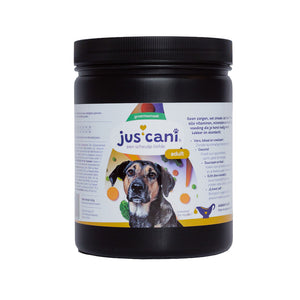
This is where a powdered gravy can be practical. Jus’Cani is a vegetarian gravy powder for dogs: mix one-third powder with two-thirds lukewarm water, then pour it over the meal. It is made to add vitamins, minerals, prebiotics, and omega 3 to simple, mostly plant-based home-cooked meals, and it can also be poured over kibble.
The point is not to make every bowl identical. It is to give home cooking a dependable base, so you can vary the ingredients while keeping the feeding approach clear. Recipes can be prepared in less than 15 minutes and frozen in portions, which makes a home-cooked routine more achievable on busy days.
A simple 400-gram bowl to try
For a practical starting point, make a 400-gram portion from familiar cooked ingredients. Combine 160 grams cooked lentils or beans, 140 grams cooked rice or another grain, and 100 grams softly cooked vegetables such as carrots, zucchini, or green beans. Keep seasonings, salty sauces, onion, garlic, and rich leftovers out of the bowl.
Warm the food gently if needed. Separately, prepare the gravy according to its directions: one-third powder and two-thirds lukewarm water. Fold a splash of the prepared gravy through the meal and pour the rest over the top.
This type of bowl is useful because it is flexible, affordable, and easy to batch-cook. But the serving size and recipe should suit your individual dog. A 400-gram portion is a recipe example, not a universal daily amount. If you are new to cooking, start with a small part of the usual meal and make changes gradually.
How to choose without being misled by the name
A product called “topper” may be thick, chunky, or dry. A product called “gravy” may be a nutritious powder, a ready-made sauce, or little more than flavored liquid. Rather than choosing by category, use three checks.
First, decide what you need it to do. Are you adding a little excitement to complete kibble, or are you building home-cooked meals more often? Second, check whether the product states clearly how much to feed and whether it is intended for everyday use. Third, consider the whole bowl. The best addition is one that works with your feeding routine, budget, and values.
For a dog with a sensitive belly, skin, or coat, it can be tempting to change several things at once. Resist that urge. Keep meals simple, introduce one change at a time, and observe calmly. If concerns continue, speak with your own veterinarian. A carefully chosen food routine can support everyday consistency, but it is not a substitute for veterinary care.
Frequently asked questions
Is gravy better than a topper for dogs?
Neither is automatically better. Gravy describes a sauce-like texture, while topper describes an added part of the meal. Choose based on whether you want occasional flavor, a complement to kibble, or support for regular home cooking.
Can I use a topper every day?
Yes, if it is used according to its instructions and fits the rest of the diet. A simple extra should remain a modest part of a complete meal. For home-cooked feeding, use a product designed to help make the recipe nutritionally complete.
Can I make dog gravy from leftovers?
You can use plain, dog-appropriate cooked leftovers as part of a meal, but skip seasoned dishes and rich sauces. Pair leftovers with a clear recipe approach rather than assuming that a tasty bowl is automatically balanced.
My tip: keep your feeding routine simple enough to enjoy. A good topper or gravy should make it easier to cook with love, use ingredients thoughtfully, and make each meal feel like a small celebration for your dog.