Prebiotics Versus Probiotics for Your Dog
Prebiotics versus probiotics is not a contest where one ingredient wins. They have different jobs in your dog’s bowl: prebiotics provide food for beneficial gut bacteria, while probiotics are the live microorganisms themselves. For many dogs, the best choice depends on their current food, how steadily they handle changes, and what you are trying to support.
As a veterinary nutritionist, I often see that the confusion starts with the names. They sound nearly identical, yet they work in different ways. Once you understand that difference, choosing a complete food or a supplement becomes much less complicated.
What are prebiotics?
Prebiotics are specific types of dietary fiber that reach the large intestine and can be used by certain beneficial bacteria already living there. Think of them as nourishment for the helpful residents of the gut. They are not living bacteria themselves.
A dog can get fermentable fibers from a varied, well-planned meal. When you cook with vegetables, legumes, and grains, you are often working with ingredients that naturally contribute different kinds of fiber. That does not mean every fiber is automatically a prebiotic, or that more is always better. The amount matters, especially for a dog that is used to a very simple diet.
Prebiotics are often a practical starting point because they fit naturally into everyday feeding. They support the bacterial community that is already present, rather than adding new microorganisms. A complete meal still needs the right balance of protein, fats, vitamins, and minerals, of course. Fiber is one part of the whole bowl, not the whole story.
What are probiotics?
Probiotics are live microorganisms added to food or a supplement. To be called a probiotic, they need to be present in an effective amount and remain viable until your dog eats them. That last point is why storage, shelf life, and preparation instructions matter.
Unlike prebiotics, probiotics are not a general synonym for “good gut health.” Different strains have different characteristics, and not every dog needs them all the time. A probiotic product also deserves a little more care than a source of fiber: heat, moisture, and time can affect live cultures.
For dogs with a sensitive stomach, skin, or digestion, a carefully chosen food routine can be especially welcome. But if changes in stool, appetite, itching, or comfort continue, or if your dog seems unwell, contact your own veterinarian or Ask the Vet. Food can be a valuable daily foundation, but it is not a replacement for professional assessment when something is not right.
Prebiotics versus probiotics: the key difference
The simplest distinction is this: prebiotics feed beneficial bacteria, while probiotics add live bacteria. They may be used together, but they do not have to be.
Picture your dog’s gut as a garden. Prebiotics are the compost that helps existing plants grow. Probiotics are more like adding selected seeds. The garden still needs a suitable environment - a consistent diet, enough nutrients, and changes introduced calmly - before anything has a chance to settle well.
That is why a product containing both is not automatically better for every dog. If your dog does well on a complete, stable diet, prebiotics may be all that is needed in the daily routine. If you specifically want a food that includes both prebiotics and probiotics, look closely at how it is formulated and stored.
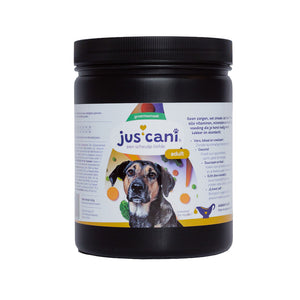
At Jus'Cani, the ADULT formula contains prebiotics. SENSITIVE contains the ADULT base plus probiotics, glidkruid, and MSM. The distinction is deliberate: probiotics belong with SENSITIVE, not with ADULT or MOTION.
When might prebiotics make sense?
Prebiotics can suit dogs whose meals need more thoughtful fiber support without making feeding complicated. They can be particularly useful when you are moving from a heavily meat-based bowl toward simple homemade meals with vegetables, legumes, and grains, while still ensuring the meal is complete.
They also fit the philosophy of using food with care rather than constantly chasing the next addition. A steady menu gives you a clearer picture of what your dog enjoys and handles well. If you change five things at once, it becomes difficult to know what made the difference.
Start small when introducing a new food or recipe. Even a healthy change can be too abrupt for a dog accustomed to one familiar kibble. Watch the whole dog, not only the bowl: appetite, energy, stool consistency, skin, coat, and general comfort all help you judge whether the routine is working.
When should you consider probiotics?
Probiotics are worth considering when you are intentionally choosing a food that includes them, rather than adding them simply because they sound healthy. A sensitive dog may benefit from a calm, consistent approach to meals, and a formula designed for that purpose can make daily feeding easier.
Still, probiotics are not a shortcut around the basics. A dog needs a complete diet, appropriate portions, and gradual transitions. Giving live cultures alongside an unsuitable or constantly changing menu is unlikely to create the clarity you want.
When comparing products, check whether the label clearly identifies that probiotics are included, whether there are storage directions, and whether the food fits your dog’s overall needs. Avoid piling several new supplements onto the same meal. Simple and consistent is usually easier for both you and your dog.
A practical way to make the change
If you cook for your dog, you do not need an elaborate menu to take a more thoughtful approach. Begin with one dependable recipe, make it complete with a suitable vitamin and mineral base, and adjust gradually.
For a 400-gram serving, combine cooked grains, well-cooked vegetables, and a suitable cooked protein source such as legumes or a smaller amount of meat, depending on your recipe. Add a little water if needed for mixing, then finish with a splash of prepared Jus'Cani according to the package instructions. The powder is mixed as one-third powder with two-thirds lukewarm water before pouring it over the meal.
Use this simple transition checklist:
- Keep the first few meals familiar and change only one element at a time.
- Introduce the new recipe gradually over several days rather than switching overnight.
- Prepare a few portions in advance and freeze them, so consistency stays easy on busy days.
- Keep notes for a week about the recipe, portion size, and how your dog responds.
Do all dogs need both?
No. A dog thriving on a complete diet does not necessarily need extra probiotics. And a dog eating a fiber-poor, repetitive diet may benefit more from improving the meal itself than from adding another jar or powder.
It also depends on the individual dog and the rest of the diet. Older dogs, active dogs, and dogs with sensitive digestion do not all need the same formula. That is why feeding should start with the dog in front of you, not with a trend on a label.
Cooking with mostly plant-based ingredients can be a thoughtful, budget-conscious, and lower-waste way to feed, especially when you use suitable leftovers carefully. But homemade does not automatically mean complete. The essential nutrients remain essential, whether the bowl contains meat, legumes, or both.
Frequently asked questions
Can I give prebiotics and probiotics together?
Yes, they can appear together in a food routine because they have different roles. Keep the rest of the diet stable when you introduce them, so you can observe how your dog responds.
Are prebiotics the same as fiber?
No. Prebiotics are a specific type of fermentable fiber that can nourish certain beneficial bacteria. Fiber is a broader term, and different fibers behave differently in the gut.
Should I switch food quickly if my dog has a sensitive stomach?
Usually, a gradual switch is kinder to the digestive system. If signs of discomfort persist, become severe, or your dog seems unwell, speak with your veterinarian or Ask the Vet.
My tip: choose fewer changes, made with more attention. A lovingly prepared bowl, a complete nutritional base, and a calm routine often tell you far more than a cupboard full of extras.